
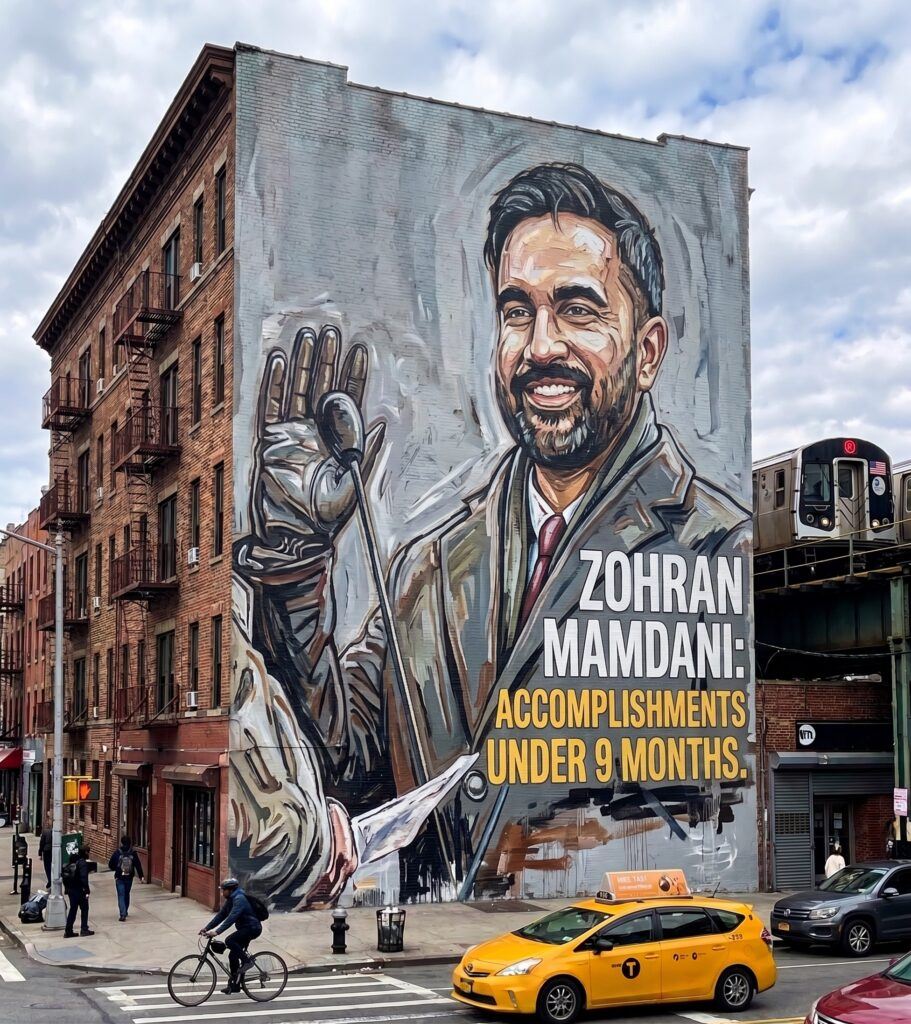
Whenever working people ask why life keeps getting more expensive while public services crumble, establishment politicians offer the same tired chorus: “Real change takes time.” “The municipal machinery moves slowly.” “We need broad stakeholder consensus.”
For decades, career officials have treated governance like an endless study committee. Gridlock isn’t an accident in modern American politics, it is a feature. It provides convenient political cover for doing nothing while quietly cashing checks from real-estate syndicates, private equity firms, and corporate Super PACs. The public is conditioned to believe that even basic dignity like, affordable housing, safe transit, accessible childcare is administratively impossible.
The Nine-Month Disruption
Then came January 1, 2026.
I don’t think any mayor in modern American history has accomplished this much structural change within their first nine months. While typical administrations spend three quarters setting up blue-ribbon study committees and placating donors, City Hall under Mamdani has treated municipal administration like an emergency public utility rather than donor management.
Just over eight months into his term as the 112th mayor of New York City, Zohran Mamdani’s tenure has dismantled that excuse factory in real time.
The Receipts Speak for Themselves
1. Public Spaces & Rapid Neighborhood Fixes
- The “Renew Crew”: Established a rapid-repair task force of trades specialists (electricians, painters, plumbers) deployed to fix broken playgrounds, sports courts, and rec centers across all five boroughs, completing repairs within three weeks instead of letting them sit in years-long capital project delays.
- Road & Street Quality: Surpassed 100,000 potholes repaired across the five boroughs following a brutal winter.
- “Repair and Bill” Landlord Program: Revitalized emergency repair enforcement to directly fix hazardous building conditions when landlords stall, charging the bill straight back to property owners.
- Street-Level Delivery: Sped up outer-borough bus priority corridors, tackled grocery deserts starting with public food hubs at East Harlem’s La Marqueta, and closed a multi-billion-dollar deficit without gutting vital youth infrastructure.
2. Tenant Power & Housing
- $34 Million Won for Tenants: Secured directly through tenant advocacy, enforcement actions, and legal restitution against predatory landlords in his first months.
- “Block by Block” Housing Blueprint: Advanced the $28 billion housing plan designed to stabilize 200,000 units, construct 200,000 affordable homes by 2031, inject $5.6 billion directly into NYCHA capital repairs, and establish a $40/hr wage floor on city-backed construction.
- Mayor’s Office of Deed Theft Prevention: Created a specialized enforcement agency specifically to protect vulnerable, working-class homeowners, predominantly targeting Black and brown neighborhoods from white-collar property theft.
- Revitalized Office to Protect Tenants: Executive Order 03 centralized the defense of rent-stabilized tenants and laid the groundwork for citywide rent freezes.
3. Working Families & Children
- $1.2+ Billion Childcare Expansion: Partnered across state lines to unlock a landmark childcare expansion that secured universal 3-K across the five boroughs.
- The “2-Care” Pilot: Launched the historic pilot program providing free universal childcare for two-year-olds in high-need neighborhoods, establishing a clear pathway toward universal coverage.
- Worker & Small Business Restitution: Reclaimed $9.3 million in unpaid wages and restitution for exploited workers and local small businesses through aggressive labor enforcement.
4. Democratic Access & Immigrant Protections
- Mayor’s Office of Mass Engagement (OME): Established on day two to formalize grassroots community feedback directly into municipal decision-making.
- Firm Immigrant Firewalls: Enacted strict directives preventing federal immigration authorities from using city resources or entering city property without valid judicial warrants.
When politicians aren’t answering to donor phone banks every afternoon, municipal machinery actually moves.
Why the Establishment is Terrified
The panic inside donor-class cocktail parties is about exposure.
When a leader enters office with zero corporate obligations and starts delivering concrete relief within 250 days, it shatters the establishment’s favorite illusion.
It proves that the sluggishness of municipal government was never technical, it was financial. Every excuse about “budgetary constraints” or “procedural delays” evaporates when someone demonstrates that political will was the missing ingredient all along.
An unbought official doesn’t just pass policy. They expose every neighboring representative who claims their hands are tied.
The Takeaway for the Midterms
As midterm season approaches, working-class voters face a stark choice between rhetoric and alignment.
For years, campaigns have been won on polished resumes, focus-grouped slogans, and multimillion-dollar dark-money blitzes.
The lesson coming out of New York City’s first nine months is simple: stop buying the excuse that public relief is impractical.
If an administration can shake the foundation of the country’s most complex city in under a year, voters nationwide should stop settling for managed decline.
Demand candidates whose only allegiance is to the people who cast the ballots.
What Are Your Thoughts?
Name another mayor in modern American history who has delivered this much in under nine months.
Is this the new blueprint for working-class governance, or can the establishment slow it down?
Drop your thoughts in the comments below.