Elections today are a massive financial show. I’m talking about hundreds of millions of dollars that shape everything from local ads to national debates.
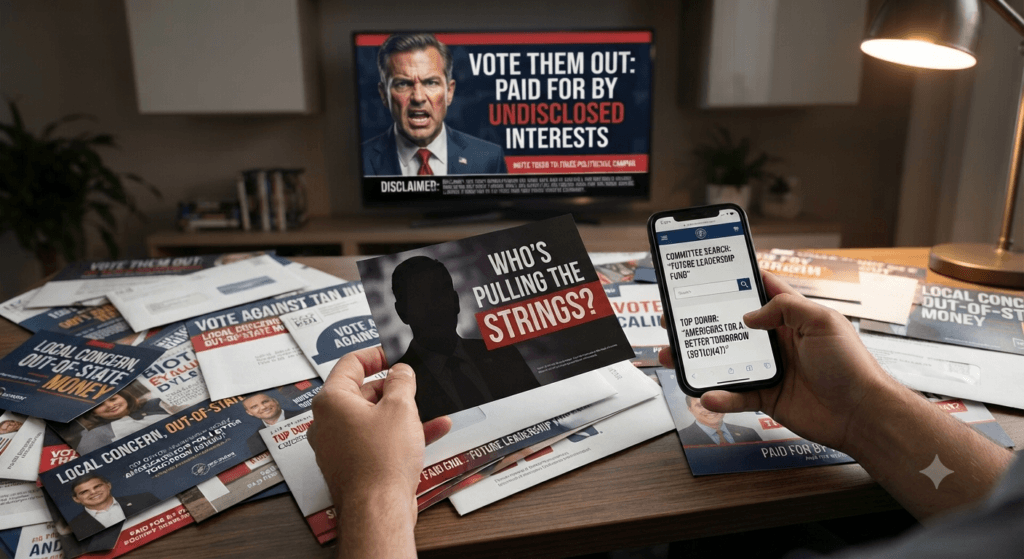
It’s like your mailbox turns into a battleground of out-of-state influences whenever election season rolls around.
We’ve got tons of money flowing in from every direction, making it tough to keep track of who’s really bankrolling these candidates.
This isn’t some hidden conspiracy. It’s right there in the open, yet somehow cloaked in a fog of complexity.
Understanding where this money comes from and where it goes is more than just an academic exercise.
For folks like us, knowing who exactly is pulling the strings and lining the campaign wallets is crucial to getting a clear picture so we can make informed decisions at the polls.
It’s crucial to get a clear picture so we can make informed decisions at the polls.
Here’s the good news, you don’t need to be a finance wizard to figure this stuff out.
There’s a treasure trove of resources and databases available that can make breaking through the political spin as easy as scrolling through your newsfeed.
So, buckle up because this guide is all about cutting through the jargon and giving you the tools you need to shine a light on campaign contributions.
Together, we’ll pull back the curtain and reveal the real players behind the political scenes.
Demystifying the Language: Key Terms in Campaign Finance
Campaign finance can sometimes feel like deciphering a whole other language.
You’ve got jargon flying around like Super PACs, dark money, and a bunch of other terms that seem designed to be confusing on purpose.
Let’s kick things off with Super PACs. These are like mega-donors of the political world.
They can rake in eye-popping amounts of cash from corporations, unions, and rich individuals. But here’s the kicker, they’re not supposed to coordinate directly with the candidate’s official campaigns. Sounds like a loophole, right?
Then there’s dark money, the mysterious villain of campaign finance.
This money sneaks through 501(c)(4) social welfare nonprofits and 501(c)(6) trade associations, keeping donor identities under wraps.
It’s like the political world’s best-kept secret, and it makes transparency tough.
Independent expenditures are the free agents here. Imagine media buys or digital campaigns zooming into the spotlight, supporting or opposing candidates without being tied to their official campaign committees.
They operate like lone wolves, doing their own thing while still wielding influence.
Look, understanding these terms gives you the upper hand when you’re trying to piece together who’s moving money around and why.
If you can crack this code, you’re halfway to seeing through the political smoke and mirrors.
Navigating the Digital Trail: Tracking Campaign Contributions Online
Tracking down campaign contributions online can seem like a daunting task, but with the right steps, you can become a whiz at it. Trust me, it’s easier than you think.
First up, the Federal Election Commission (FEC). This is your go-to starting point for digging up official campaign finance receipts and filings. You’ll find detailed reports on contributions and expenditures that can give you a clear view of the financial landscape of any campaign.
Next, cross-reference this data with OpenSecrets. This site is like your campaign finance detective partner, helping you connect the dots between candidate committees, outside spending groups, and industry-specific donors. It’s got loads of info on top contributors, making it a goldmine for understanding where the big bucks are coming from.
Don’t forget about state-level spending either. Local races and ballot measures can have a huge impact, and tracking these contributions is crucial for a complete picture. Many states have their own specialized public databases where you can uncover this information. If you want the full story, then there you have it right down to the local level.
With these steps, you’ll blaze a trail through the maze of campaign finance data. You’ll be able to see not just who’s paying to influence elections, but also how these financial maneuvers play out across local and national stages.
Seeing Through the Smoke: Identifying Misdirection in Political Ads
Ever feel like you’re being played by all those slick political ads during election season?
You’re definitely not alone. There’s a whole lot of effort put into crafting messages that seem more genuine than they really are, and it’s all by design.
Take those vaguely patriotic-sounding committee names, for instance.
They might conjure up images of national pride or grassroots support, but dig a little deeper, and you might find they’re more manufactured than homegrown.
It’s crucial to check who’s really behind these names. Often, it’s wealthy individuals or organizations with specific agendas.
Out-of-state funding sources can also be a huge red flag. When money flows in from across the country into a local election, it’s worth questioning what kind of influence that money is trying to exert and why.
And let’s talk about those so-called grassroots movements. Sometimes, they’re less grassroots and more like a carefully constructed facade meant to appear organic to the casual observer.
If you find a movement that’s getting major airtime and lots of funding but seems to spring out from nowhere, it’s time to put your detective hat on.
The truth is, political advertising often relies on people not looking too closely.
But by staying savvy and questioning what you see, you can cut through the spin and start to understand the true underpinnings of what you’re watching.
Your Toolbox: Essential References for Campaign Finance Investigations
Ready to start your own campaign finance investigation? You’ll need some killer tools to get started, and I’ve got just the list for you.
First up is OpenSecrets, a stellar resource for anyone looking to track money in U.S. politics. It’s your best friend for understanding dark money networks and figuring out who’s backing those ubiquitous Super PACs.
For official documents and filings, the Federal Election Commission (FEC) is your go-to. It’s a treasure trove of historical and current data on campaign finance, offering detailed reports for anyone willing to explore.
Want to dig into the state-level details? FollowTheMoney.org has got you covered. This site is all about state-level campaign contributions, lobbying data, and local political influence across every state. It’s perfect for when you want to zoom in on your own backyard.
And don’t overlook the Campaign Legal Center. This nonpartisan organization provides deep legal insights, transparency reports, and crucial updates on election laws. It’s a must for understanding the bigger legal picture.
OpenSecrets (incorporating FollowTheMoney.org): The premier authority for tracking money in U.S. politics. Following its merger with the National Institute on Money in Politics (the team behind FollowTheMoney), OpenSecrets now combines federal data with comprehensive state-level campaign contributions, lobbying data, and local political influence across all 50 states into a single powerhouse resource.
With these resources at your fingertips, you’re well-equipped to pull back the curtain on campaign contributions and become an informed participant in our democracy. Get out there and start investigating!