
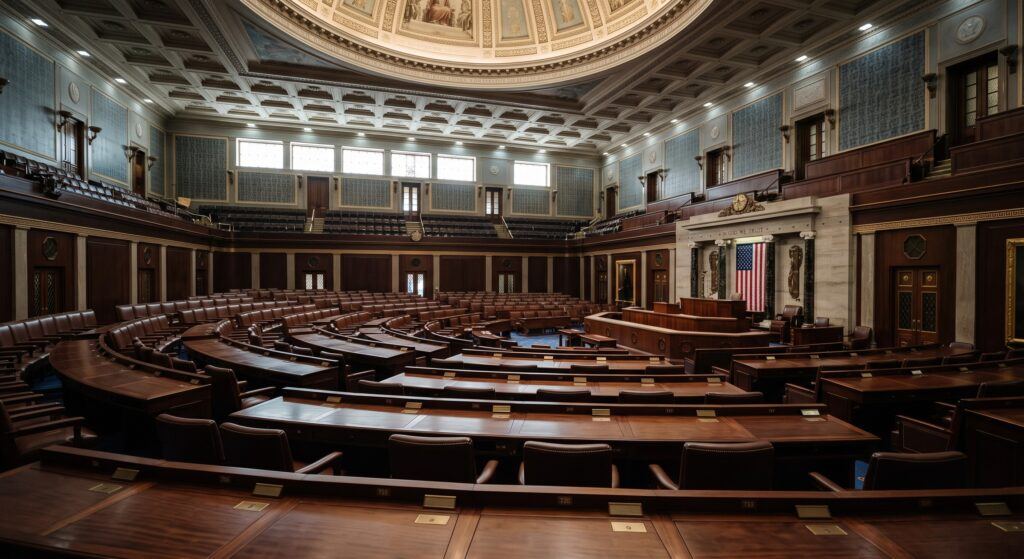
 The average American worker clocks in roughly 240 to 260 days a year to earn their livelihood. Meanwhile, on Capitol Hill, the official calendar tells a vastly different story.
Between district work periods, state work periods, national holidays, and extended summer recesses, the number of days lawmakers are actually convened in Washington to debate, draft, and vote on legislation often hovers around just 113 days a year.
At a base annual salary of $174,000, that schedule raises a critical question: what does the taxpayer actually get for that calendar, and how does the compensation shake out when measured by the days Congress is on the floor?
The Schedule Breakdown: 113 vs. 260
To understand the disparity, look at how an ordinary full-time work year compares to the legislative calendar:
| Metric | Typical Full-Time U.S. Worker | U.S. Representative / Senator |
|---|---|---|
| Annual Base Pay | ~$60,000 (Median) | $174,000 |
| Scheduled In-Office Days | ~240 – 260 days | ~113 session days |
| Gross Pay Per Workday | ~$230 – $250 / day | ~$1,539 / session day |
| Summer Recess | 0 – 2 weeks paid leave total | 5 – 6 consecutive weeks |
Lawmakers rightly point out that “recess” does not strictly mean lying on a beach. District work periods involve town halls, local ribbon-cuttings, constituent casework, and donor meetings. Yet from the perspective of formal legislative governance passing budgets, vetting bills, and conducting committee oversight the official doors in D.C. are open less than a third of the year.
Doing the Math: $1,539 Per Legislative Day
Members of Congress haven’t taken a formal pay raise since 2009, maintaining a flat baseline of $174,000 (with leadership earning slightly more, $193,400 for majority/minority leaders and $223,500 for the Speaker of the House).
When that fixed salary is divided exclusively by the roughly 113 days the House or Senate is officially gavelled in.
- $174,000 ÷ 113 session days = $1,539.82 per session day.
- By comparison, an American earning the national median household income would need to work nearly an entire week and a half to match what a lawmaker takes home for one day on the floor.
Even if you give credit for an additional 60 days of genuine local constituent work back home (bringing the functional total to ~173 days), Congress still pulls in roughly $1,005 per working day.
See how federal figures compare in real numbers using our interactive budget calculator.
Perks Beyond the Base Salary
The $174,000 salary is only the headline number. Lawmakers receive an array of institutional allowances, taxpayer-subsidized benefits, and administrative perks that push the true cost of each seat significantly higher:
- The Members’ Representational Allowance (MRA): Every House member receives an annual office budget typically averaging between $1.5 million and $2.0 million to cover staff payroll, district office leases, and travel.
- Franking Privileges: Free mass mailings and digital constituent outreach funded straight out of official budgets.
- Healthcare & Retirement: Subsidized plans through the DC Health Link exchange under the Affordable Care Act, paired with the Federal Employees Retirement System (FERS) and Thrift Savings Plan (TSP) matching up to 5%.
- Gym & Parking Privileges: Private on-site wellness facilities, dedicated parking at major D.C. airports (Reagan National and Dulles), and dedicated security escorts.
Governance on a Part-Time Clock
The defense frequently offered by leadership of both parties is that legislating shouldn’t happen 365 days a year that the founders intended a citizen legislature that remains rooted in local communities rather than trapped in the Washington bubble.
However, critics point out the recurring consequence of the compressed calendar, perpetual deadline governance. Year after year, omnibus spending packages running thousands of pages are introduced and voted on in 48-hour windows, routine appropriations stall, and government shutdown showdowns become regular calendar events.
When the legislative calendar leaves nearly 250 days off the Capitol floor, the work doesn’t disappear, it gets crammed into emergency late-night votes right before lawmakers pack their bags to catch weekend flights home.
What’s your take! Should lawmakers spend more mandatory days on the floor in D.C., or does real governance happen back home in their home districts? Share this piece with your network and sound off below.
Related Reading: Explore our Institutional Accountability Archive or test your own numbers on the Interactive Budget Calculator.